Apirone fee policy

Our fee policy is designed to be transparent, flexible, and adaptable to different business models. We understand that merchants have different payment flows and volumes, which is why we offer multiple tariff options and fine-grained fee configuration at the network level.

Flexible configuration
All fee settings in Apirone are configured at the blockchain network level, not at the account level.
How it works in practice
Coins such as Bitcoin, Litecoin, Dogecoin, and Bitcoin Cash have only one network — the mainnet. For these assets, the fee is configured directly for the coin itself. Stablecoins and tokens (for example, USDT and USDC) exist on multiple networks:
- Tron
- Ethereum
- Binance Smart Chain
If we take the Tron network as an example:
- when you select a tariff plan for TRX, it is automatically applied to USDT and USDC on the Tron network;
- when you change the tariff plan for USDT (Tron), it is also applied to USDC and TRX within the same network.
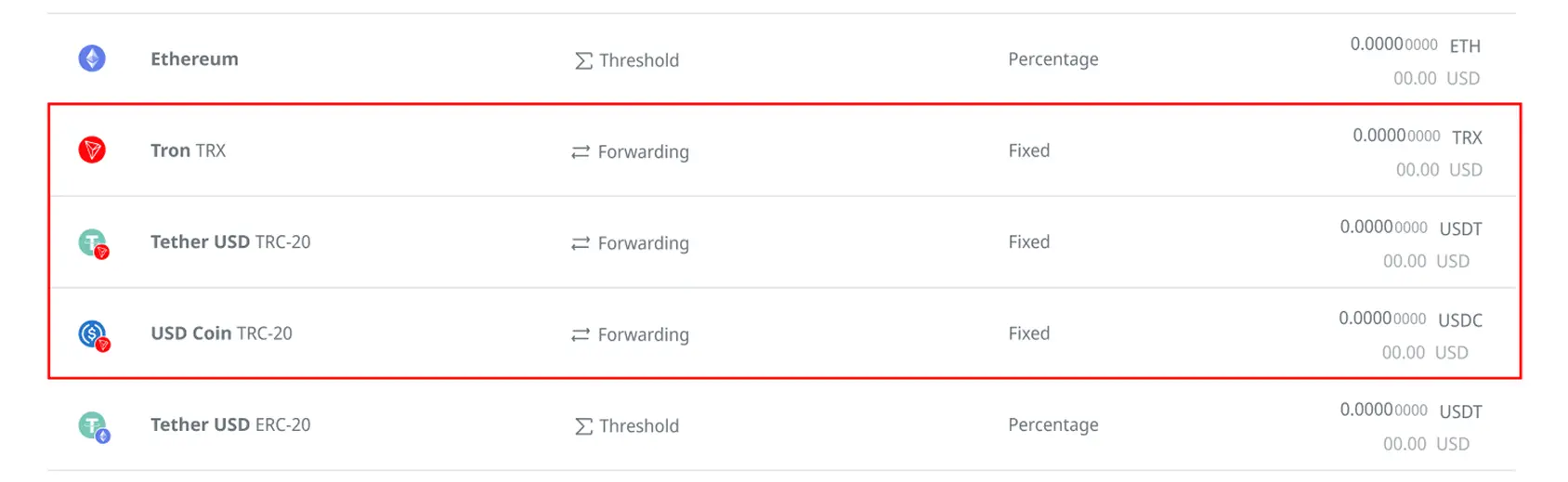
Types of fees in Apirone
Depending on how you use the service, you can choose between two main fee types.
1. Percentage fee
A simple and predictable model where a 1% commission is charged on any outgoing transaction amount. This option is well suited for businesses with variable payment sizes or for those who prefer proportional fee allocation.
2. Fixed fee
A fixed fee does not depend on the transaction amount and is predefined for each coin and network. All current rates are available in the pricing table on the Pricing page
In the table, you will see two types of fixed fees:
- Regular
- Forwarding

Regular and Forwarding in fixed fees
Regular — standard withdrawal
This is a standard withdrawal that you can initiate manually at any time. This fee type also applies to:
- recurring automatic payouts;
- threshold-based payouts.
Forwarding — standard withdrawal
Instant Forwarding is configured in the Auto Transfer section and enables immediate transfer of funds to your address as soon as a payment is received. The forwarding process works as follows:
- 1. A customer sends funds to a temporary payment address.
- 2. Once the payment is received, the funds are instantly transferred from the temporary address to your main wallet.
- 3. The forwarding transaction is executed minus the configured fee.
This process is fully automated and ensures immediate settlement to your wallet. You can learn more about forwarding mechanics in a dedicated article Forwarding payments
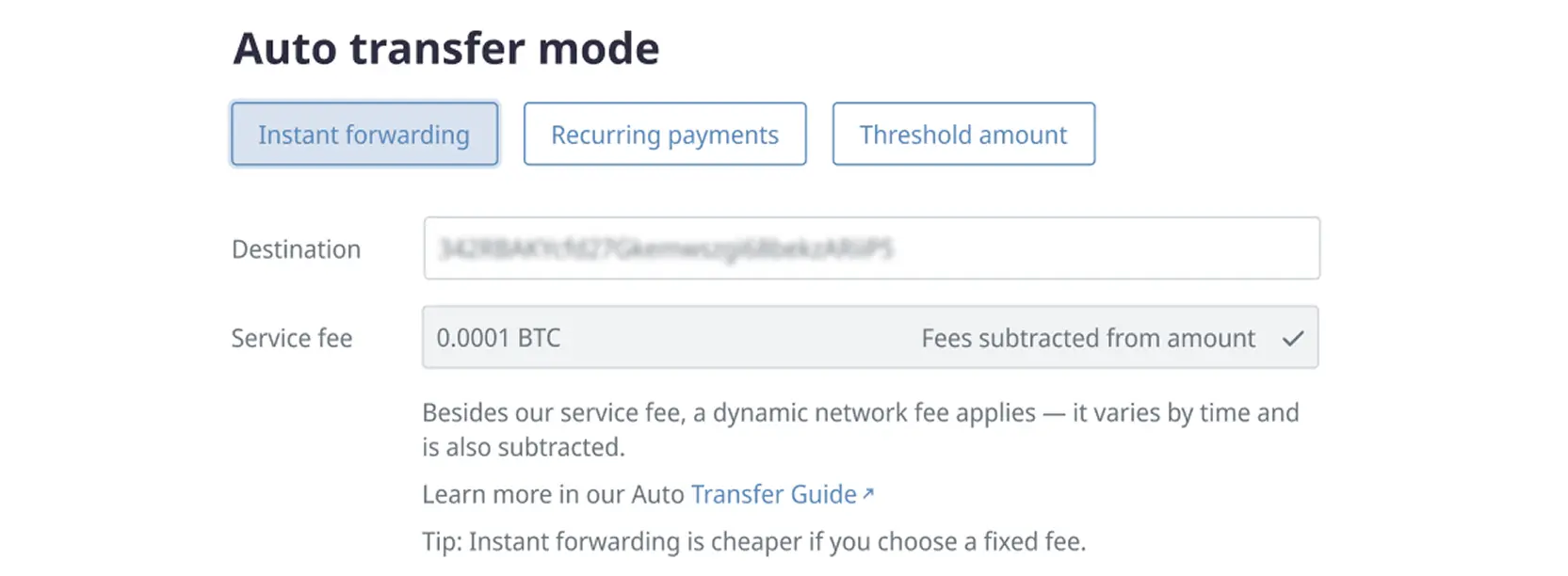
Mass payouts with fixed fees
Although a fixed fee may seem higher at first glance, it offers an important practical advantage — mass payouts. In Apirone, you can:
- specify multiple addresses within a single withdrawal;
- upload a CSV file with addresses and payout amounts (for example, salaries or contractor payments).
From the system’s perspective:
- this is a single Payment;
- containing multiple transactions.
This allows you to:
- save time;
- reduce manual operations;
- efficiently scale payouts;
- save on service fees.
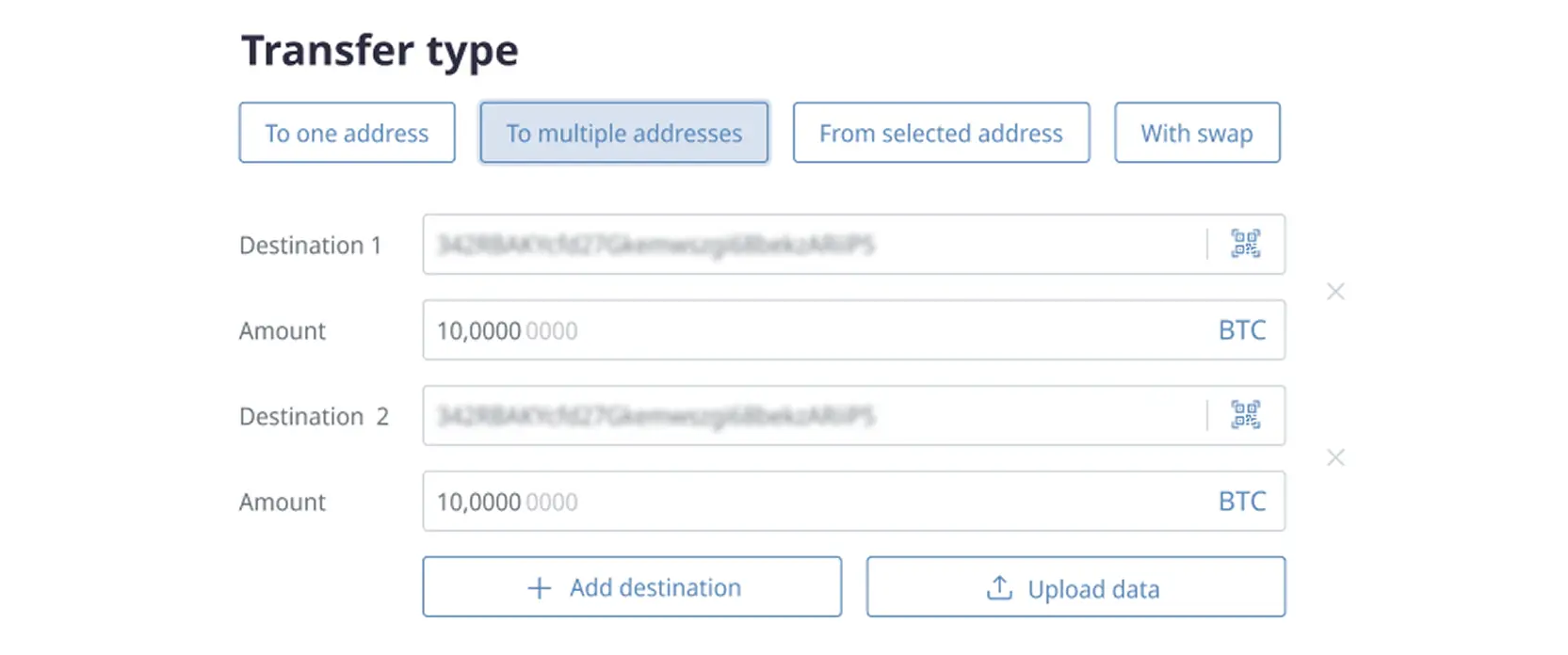
Network fees
All network fees are individual for each blockchain and depend on the current state of the network. This is important because different networks, such as Ethereum or USDT-based networks, have their own technical and transactional characteristics. Please note:
- network (blockchain) fees are set by the blockchain itself;
- they do not depend on our platform;
- they apply to all transactions.
Network fees are charged separately from the service fee and should be taken into account when planning costs. During periods of high network load, blockchain fees can be significantly higher. When withdrawing funds from multiple wallet addresses, network fees may also increase, while the service fee remains the same as for a single address